Visual rail-environment guide
Exposed Rail vs. Flush Rail Wheel Chocks
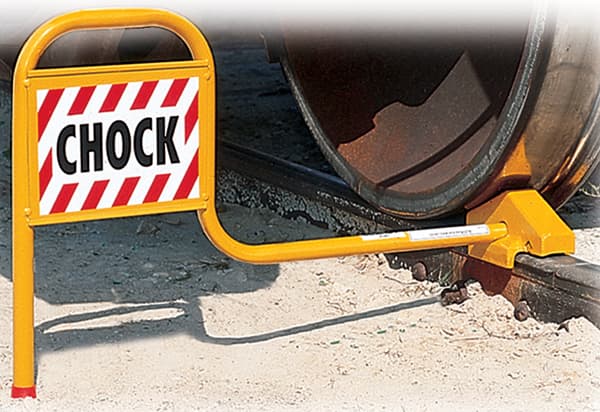
The surrounding track surface affects which chock configurations can engage the rail. Use this visual guide to document the environment, then confirm a specific product against the site.
How the Surrounding Surface Differs
Use actual, accurately labeled photos or diagrams. The comparison should help document the environment without implying that visual identification alone confirms product compatibility.
Capture the Rail and Its Surroundings
From a safe location, show the overall track, close rail profile, surrounding surface, visible fasteners or groove, clearance, drainage or debris conditions, and any change between track sections.
Overall track context
Show how the rail sits within the work area and surrounding surface.
Close rail detail
Show the rail edge, fastening area or groove, and adjacent material.
Mixed conditions
Document transitions or multiple track environments separately.
Surface Access Changes the Product Category
A chock designed around accessible rail geometry should not be assumed to work where pavement restricts access, and a flush-rail category should not be treated as universal. Confirm the product, rail, task, and site procedure together.
Mark It as Unsure and Request Review
Always follow your facility safety procedures and applicable OSHA, FRA, railroad, and site-specific requirements. RailYard Safety can help with product selection, but final application decisions should be reviewed by a qualified safety professional.
Frequently asked questions
What is the simplest difference between exposed and flush rail?
Exposed rail stands above the surrounding track bed with the rail and fastening area generally accessible. Flush or embedded rail sits within pavement or another surface near the rail head.
What if one facility has both rail environments?
Document each location separately. Do not assume one product category applies across mixed track conditions.
Can a photo confirm the correct wheel chock?
A photo can help identify the environment and next questions, but it may not establish dimensions, rail data, product fit, intended use, or procedural suitability by itself.