Wheel-chock selection guide
Railcar Wheel Chock Selection Guide
Start with the rail environment and facility procedure, then compare configuration, handling, visibility, quantity, and site conditions. Use the result to prepare a request, not to make an unsupported compatibility decision.
Begin With the Track, Then the Task
The same-looking product may not suit a different rail environment or procedure. Work through the questions in order and keep uncertain answers visible.
1. Identify the rail environment
Determine whether the rail is exposed, flush or embedded, mixed, or uncertain.
2. Define the task
Describe loading, unloading, maintenance, siding, transload, storage, or another use.
3. Compare configuration factors
Review product type, handling, visibility, quantity, and verified compatibility data.
4. Request review
Send the documented details when the exact product is not yet confirmed.
The Surrounding Surface Changes the Starting Category
Exposed rail generally leaves the rail and fasteners accessible. Flush or embedded rail sits within pavement or another surface near the rail head. Mixed or unusual conditions should be documented rather than forced into a category.
Single, Double, Flag-Ready, and Handling-Focused Categories
These labels describe broad product configurations. Availability, materials, dimensions, fit, and intended use must come from an approved product record.
Single-wheel
Review the intended placement and engagement described by the source.
Double-wheel
Confirm how the paired or linked configuration is defined.
Flag-ready
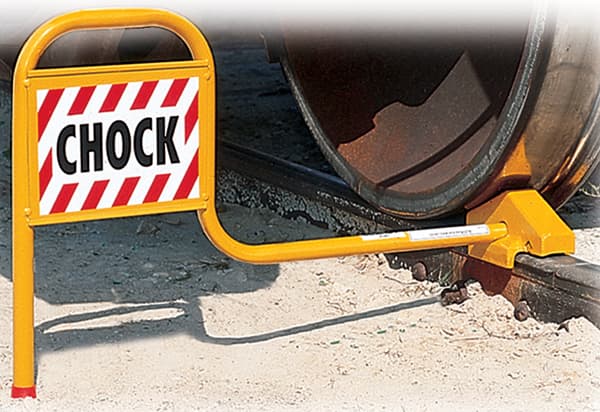
Consider visibility accessories within the facility procedure.
Handling-focused
Compare sourced handling features without making ergonomic guarantees.
Send Useful Site Information
Include overall and close track photos obtained safely, known rail data from approved records, application, quantity, handling and visibility preferences, destination, facility procedure, and existing product markings.
Track views
Show the surrounding surface, rail, visible fasteners, groove, and clearance as applicable.
Application details
Describe the task, site procedure, and where the product would be positioned.
Commercial context
List quantities, locations, destination, timeline, and purchasing needs.
Confirm the Product With Qualified Review
Always follow your facility safety procedures and applicable OSHA, FRA, railroad, and site-specific requirements. RailYard Safety can help with product selection, but final application decisions should be reviewed by a qualified safety professional.
Frequently asked questions
What is the first question when selecting a railcar wheel chock?
Start by documenting the rail environment and facility procedure. Exposed and flush or embedded track can require different product categories and selection details.
What photos are useful for wheel-chock selection?
Provide safe-to-obtain overall and close views showing the surrounding surface, rail, visible fasteners or groove, clearance, work area, and markings on existing equipment.
How should I proceed if the rail type is uncertain?
Mark it as unsure. Send approved track documentation or safe-to-obtain photos and let the review identify which additional information is needed.
Does this guide replace a facility safety review?
No. It organizes product-selection questions. Final application decisions belong in the facility’s qualified review of product data, procedures, site conditions, and applicable requirements.